
Streamline Communication Across Teams
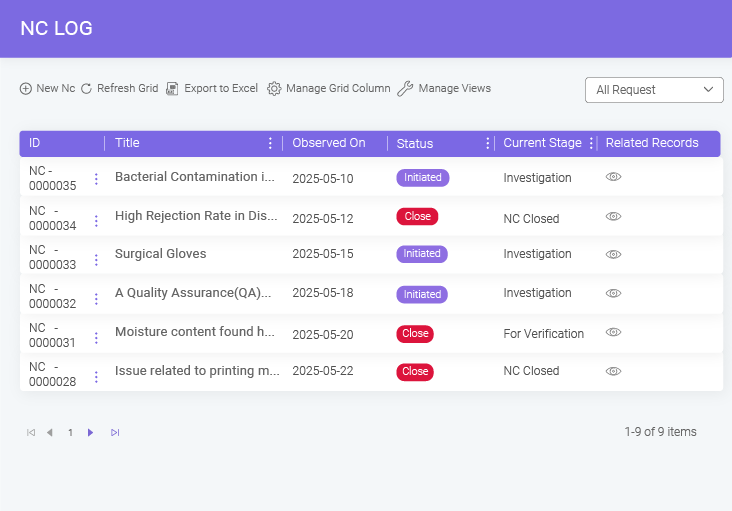
A digital QMS offers a unified platform for cross-functional teams and key stakeholders to collaborate, share information, and access nonconformance records—ensuring everyone stays informed and aligned on the same page.

Improves Operational Efficiency
By automating repetitive tasks, streamlining workflows, and triggering notifications, a QMS reduces process complexity and enables quality teams to focus on proactive analysis, boosting turnaround times and operational efficiency.

Ensure Compliance with Industry Standards
QMS establishes a structured process to properly investigate, document, and verify corrective measures that adhere to the compliance framework, helping organizations reduce regulatory risks, audit findings, and nonconformances.

Drives Strategic Decision Making
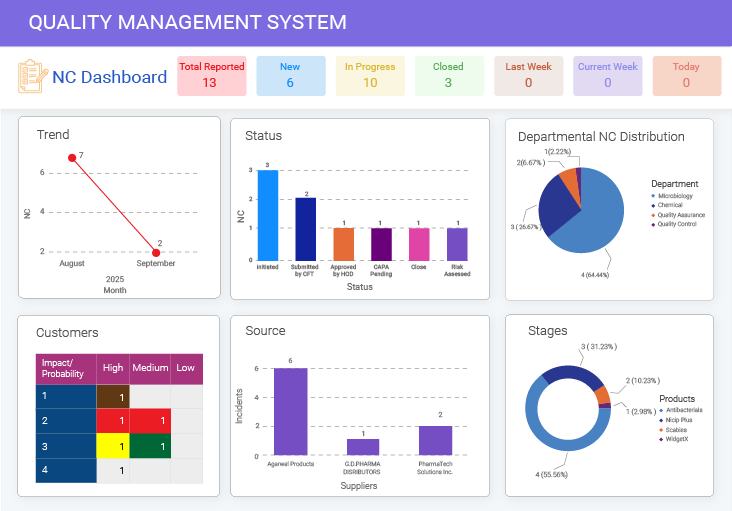
A robust nonconformance management software, by transforming data into strategic information, helps organizations to effectively capture incident data, analyze trends, and prioritize issues while bridging the gap between quality and decision-making.

Foster Proactive Quality Culture
A structured quality process that proactively identifies risks and defects helps organizations quickly resolve issues and builds trust. A well-managed nonconformance process reflects a culture of accountability and quality excellence.


Issue Detection and Documentation
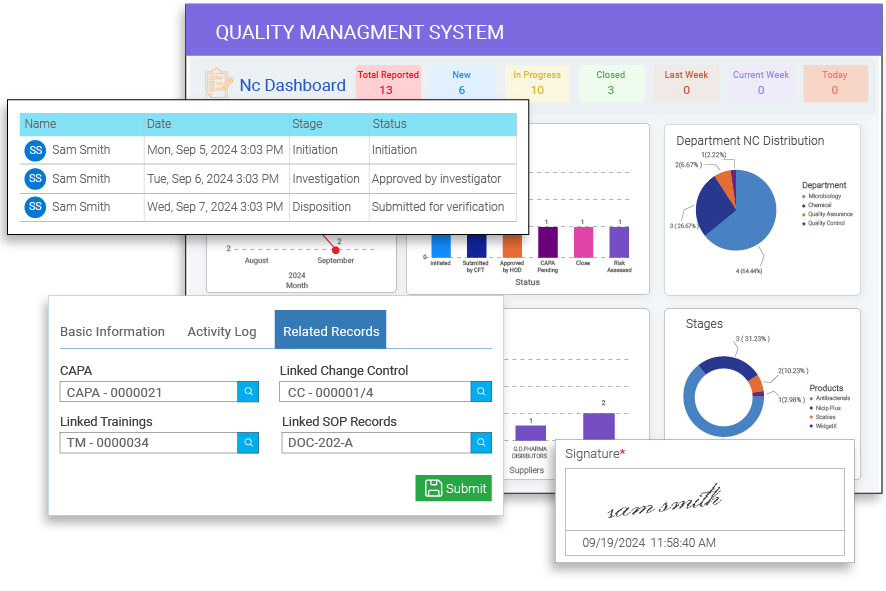
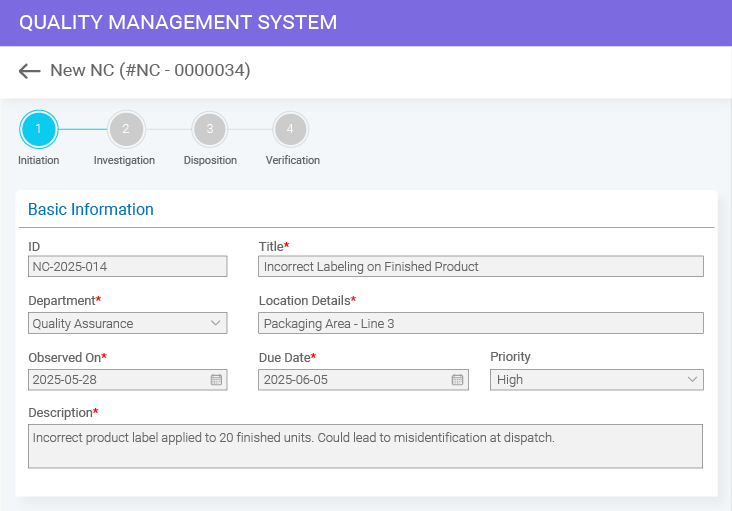
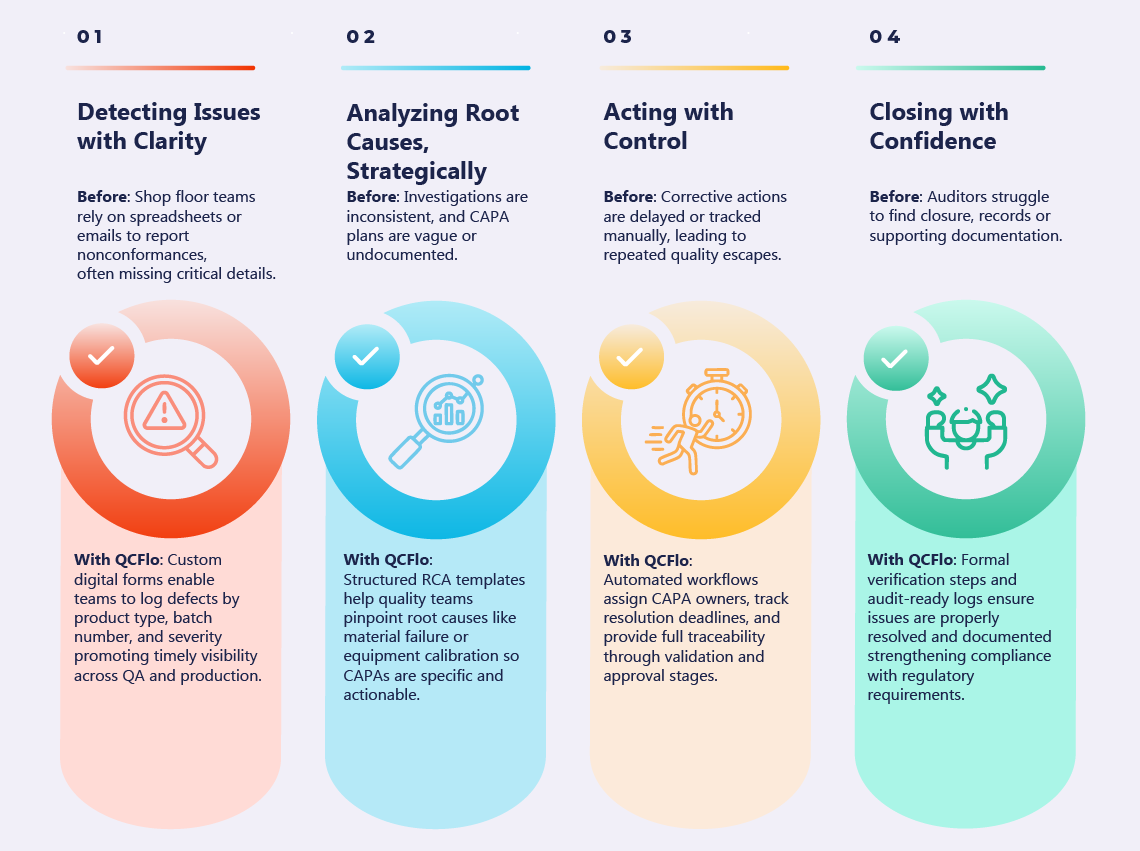
Nonconformance management starts with identifying and documenting the quality issues. QCFlo QMS with customizable, user-friendly forms allows cross-functional teams to report critical nonconformance data, such as title, source, severity, and description, to promote timely acknowledgment while fostering visibility and accountability across departments.

Root Cause Analysis and CAPA Planning
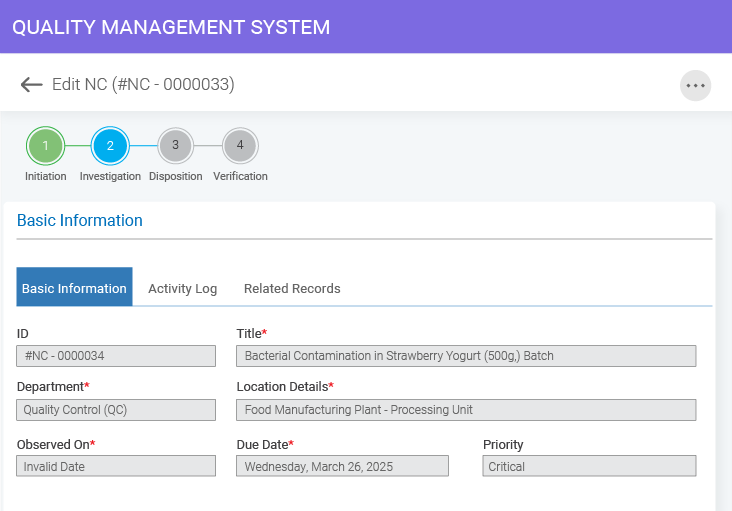
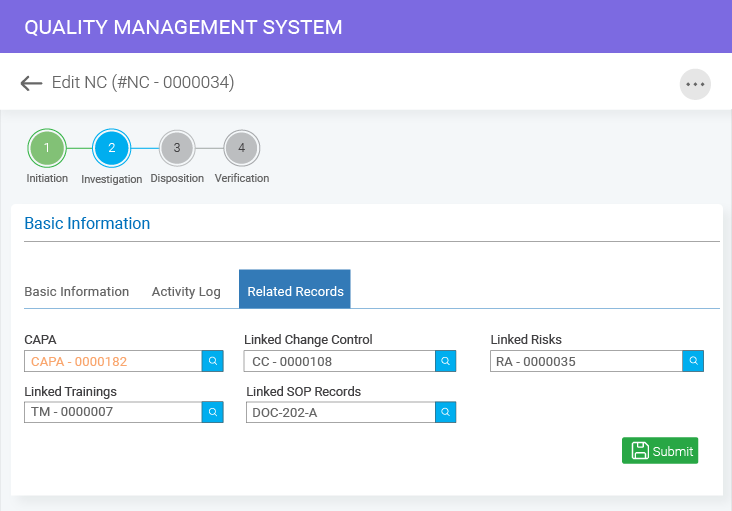
While the issue is being formally logged, QCFlo nonconformance management system offers a structured approach to classify the nonconformances and facilitates effective root cause analysis. Custom fields, including investigation overview, summary, category, and recommendations, offer in-depth insight to quality teams to effectively plan corrective and preventive measures that meet organizational quality objectives.

Implementation of Corrective Actions
QCFlo QMS makes it easy to assign, track, and monitor corrective and preventive actions. While its features, like automated approvals, task tracking, and email notification, streamline the nonconformance management process, it helps teams track progress and maintain a complete record of CAPA, ensuring faster resolution time, traceability, and compliance.

Verification and Closure
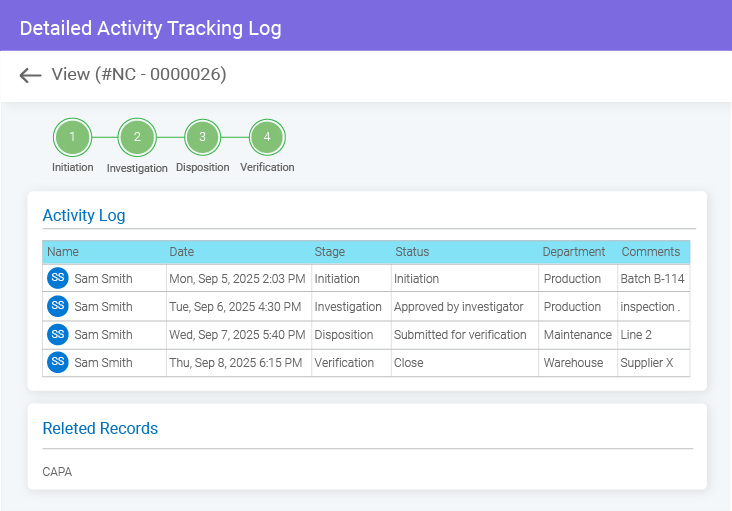
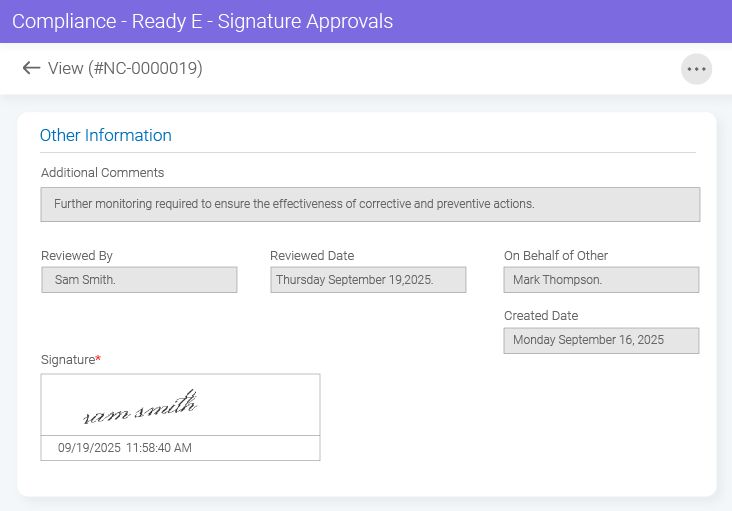
QCFlo QMS offers a structured verification process to assess whether the actions have truly addressed the root cause of the nonconformity. Robust document control helps organizations automatically log every recommendation, approval, and action to support internal quality audit and compliance standards. Once formally closed, the nonconformance records can be retained to highlight trends and process improvement.




Issue Detection and Documentation
Nonconformance management starts with identifying and documenting the quality issues. QCFlo with customizable, user-friendly forms allows cross-functional teams to report critical nonconformance data, such as title, source, severity, and description, to promote timely acknowledgment while fostering visibility and accountability across departments.
Root Cause Analysis and CAPA Planning
While the issue is being formally logged, the nonconformance management system offers a structured approach to classify the nonconformances and facilitate effective root cause analysis. Custom fields, including investigation overview, summary, category, and recommendations, offer in-depth insight to quality teams to effectively plan corrective and preventive measures that meet organizational quality objectives.
Implementation of Corrective Actions
QCFlo makes it easy to assign, track, and monitor corrective and preventive actions. While its features, like automated approvals, task tracking, and email notification, streamline the nonconformance management process, it helps teams track progress and maintain a complete record of CAPA, ensuring faster resolution time, traceability, and compliance.
Verification and Closure
A QMS software offers a structured verification process to assess whether the actions have truly addressed the root cause of the nonconformity. Robust document control helps organizations automatically log every recommendation, approval, and action to support internal quality audit and compliance standards. Once formally closed, the nonconformance records can be retained to highlight trends and process improvement.
| Key Aspects | Manual Nonconformance Handling | QCFlo (Nonconformance System) |
|---|---|---|
| Data Accuracy |
 Prone to errors due to paper forms, spreadsheets, or duplicate entries
|
 Centralized records with validation rules ensure accuracy and consistency
|
| Traceability |
Difficult to track issue history, responsible person, and corrective actions
|
Complete audit trails with time stamps, version history, and accountability logs
|
| Collaboration |
Relies on emails, meetings, and scattered communication
|
Real-time collaboration with role-based access, notifications, and shared dashboards
|
| Scalability |
Becomes complex and inefficient as the organization grows
|
Easily scales across teams, sites, and locations
|
| Insights & Reporting |
Limited visibility, requiring manual data compilation for audits or reviews
|
Built-in analytics and reporting provide instant insights for compliance and improvement
|











Free QMS buyer's guide
Choose the right QMS for compliance & efficiency