
Enhanced Quality
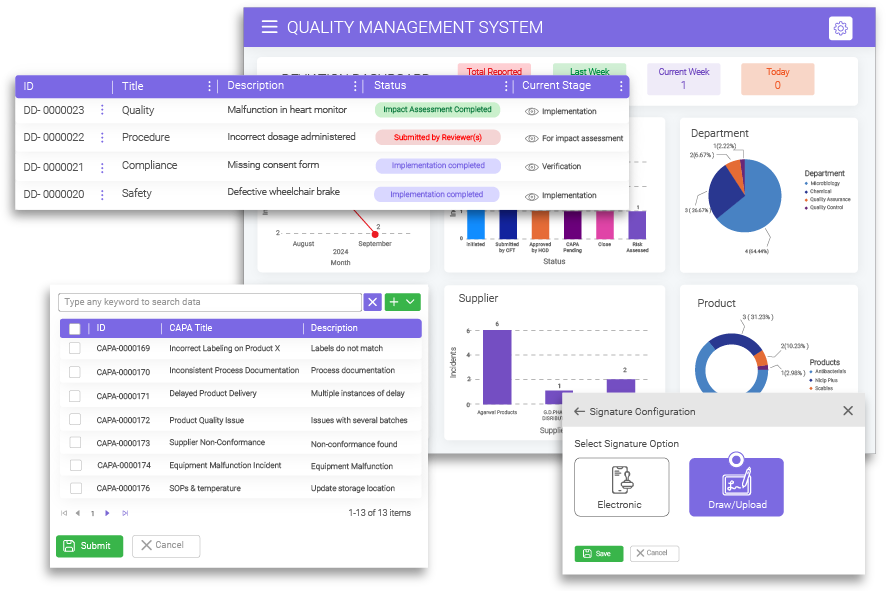
Effective deviation management workflow addresses the root cause and facilitates effective CAPA implementation, which contributes to prompt resolution of issues, reduces their impact, and fosters continuous process improvement.

Strengthens Risk Management
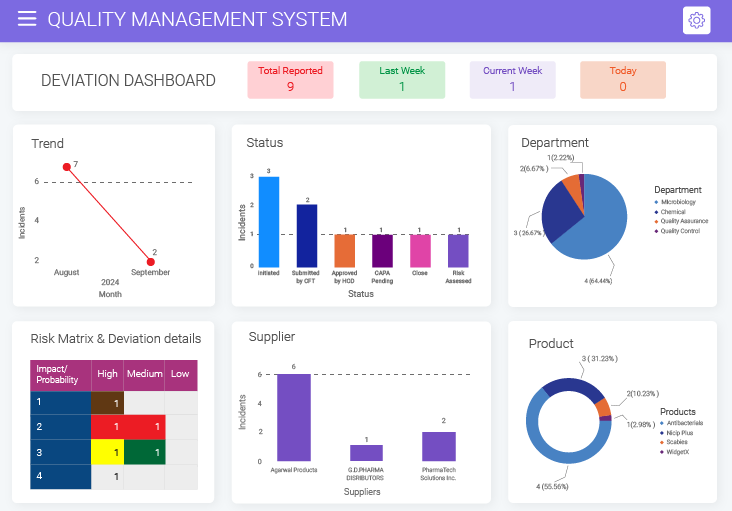
A robust deviation management solution enables early detection of risks, allowing organizations to address them before they escalate. Its comprehensive analytics and reporting capabilities enable organizations to monitor trends, facilitating proactive risk management.

Accelerates CAPA
A collaborative platform for deviation management accelerates CAPA by simplifying task management, progress tracking, and automating the review and approval process, ensuring all steps are documented and aligned with the regulatory framework.

Boosts Organizational Resilience
With a robust deviation management solution, organizations can quickly respond to potential issues, ensure cross-functional collaboration, and create an audit trail, reducing overall downtime and minimizing their impact on quality operations.

Enhances Regulatory Compliance
The centralized platform offered by a deviation management solution not only consolidates your deviation-related documentation but also ensures the process is appropriately tracked, documented, and automated, reducing the risk of non-compliance.


Deviation Assessment
A thorough impact assessment is crucial for prioritizing deviations and outlining a clear action plan. A detailed assessment template with customizable fields for findings, impacted departments, comments, and attachments assists teams in navigating the assessment process. Users can automatically route deviation records to the designated approvers for consistent evaluation.






Deviation Identification & Logging
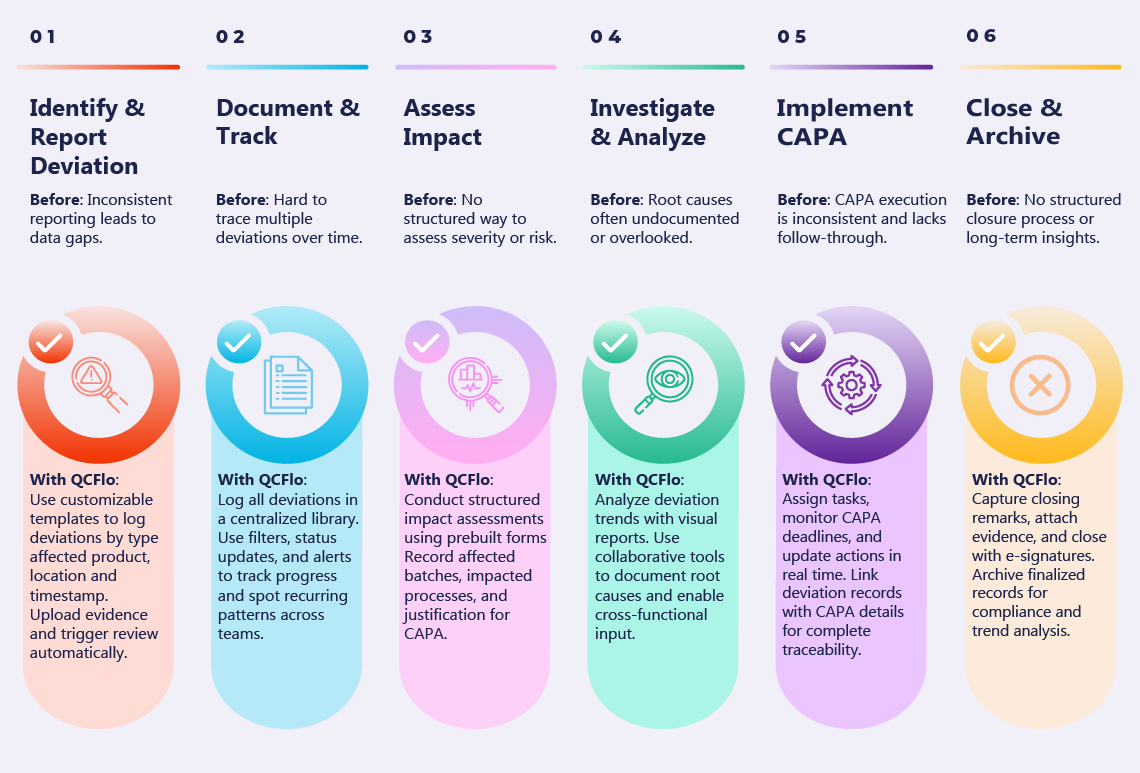
A deviation is detected when any process, product, or service deviates from the predefined standards, often detected through routine inspections and audits or process observations. Ready templates for deviation reporting with customizable fields like deviation type, description, affected areas, and location to ensure a swift, accurate, and consistent reporting process.
Deviation Documentation
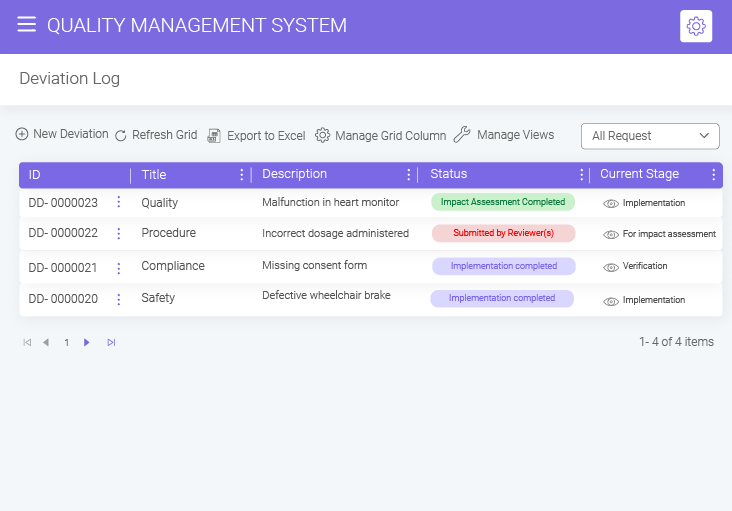
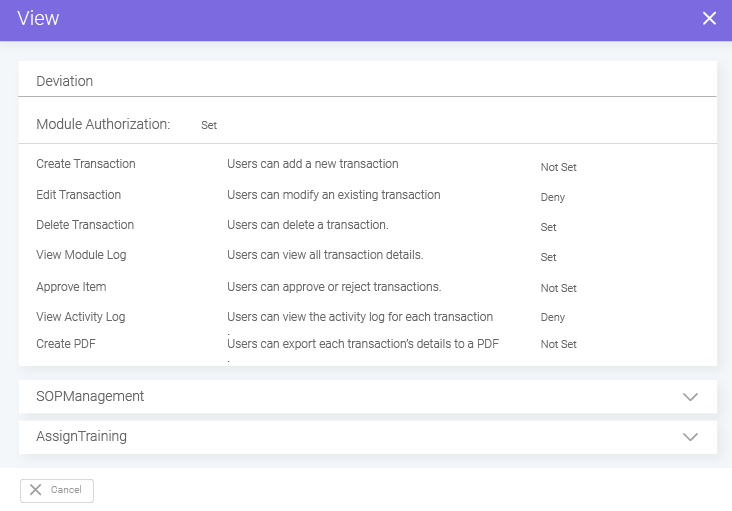
Once reported, the deviation forms must be stored in a centralized deviation log to facilitate quick retrieval and review of deviation records. It helps quality assurance teams track user action, thereby enhancing audit readiness. In the deviation library, users can manage access, automate workflows, set alerts, or even mark their favorites for enhanced efficiency.
Deviation Assessment
A thorough impact assessment is crucial for prioritizing deviations and outlining a clear action plan. A detailed assessment template with customizable fields for findings, impacted departments, comments, and attachments assists teams in navigating the assessment process. Users can automatically route deviation records to the designated approvers for consistent evaluation.
Root Cause Analysis
Identifying the underlying cause is essential to prevent the recurrence of the deviation. Thoroughly studying deviation records and analyzing visual reports and deviation history can help identify the pattern of recurring issues. Also, ensuring efficient cross-functional collaboration to facilitate communication, discuss findings, and recommend corrective actions can help prevent future issues.
CAPA Implementation
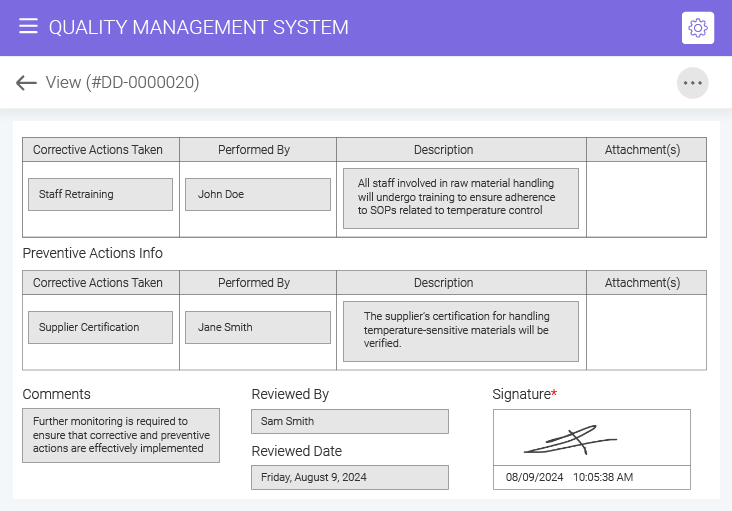
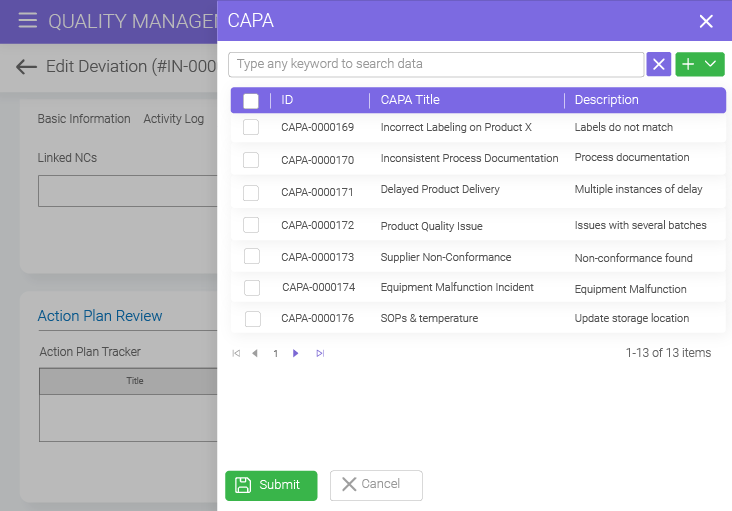
Outlining effective corrective and preventive actions based on the root cause analysis is necessary to address the deviation. A deviation management solution by digitizing CAPA implementation allows teams to easily track progress, monitor deadlines, generate detailed reports, and record CAPA details to ensure the process complies with the regulatory standards.
Review and Closure
Reviewing the effectiveness of the implemented CAPA and formally closing the deviation records is considered the final stage of the deviation management process. Ensure proper deviation records, capture detailed actions, and archive them for future reference and audits, contributing to ongoing process improvement and knowledge retention within the organization.
| Key Capability | Manual Process | QCFlo (Deviation Management Software) |
|---|---|---|
| Data Accuracy |
 Prone to errors, redundancy, and missing information
|
 Automated processes ensure consistent, error-free records
|
| Real-Time Visibility |
Limited visibility; data must be manually compiled
|
Dashboards and reports provide instant insights
|
| Response Time |
Slow logging and approvals cause frequent delays
|
Quick detection, assignment, and closure with alerts
|
| Collaboration |
Version conflicts and siloed communication
|
Role-based access enables smooth cross-team collaboration
|
| Cost of Management |
Resource-heavy with higher risk of penalties
|
Reduces costs through efficiency and fewer compliance risks
|











Free QMS buyer's guide
Choose the right QMS for compliance & efficiency