
Summary:
This blog explains what a CAPA action plan is, why it plays a critical role in resolving quality issues, and what components make it effective. You’ll learn how CAPA action plans are applied in practice, the common mistakes that cause them to fail, and how organizations can improve execution, accountability, and long-term quality outcomes.
Corrective and Preventive Action (CAPA) is a structured approach used to investigate quality issues, identify their root causes, and prevent them from happening again. Whether it is a recurring deviation, a failed audit observation, a customer complaint, or a compliance gap, CAPA helps organizations address problems systematically instead of relying on temporary fixes.
Yet, identifying the issue is only one part of the process. Many CAPA initiatives lose momentum because responsibilities are not clearly assigned, timelines keep shifting, documentation remains incomplete, or the actual root cause is never fully addressed. As a result, the same problems often resurface months later in a different form.
This is where a CAPA action plan becomes valuable. It provides a clear path from problem identification to resolution by outlining what needs to be done, who is responsible, and how success will be measured.
With a structured action plan in place, organizations can move from reacting to quality issues to resolving them in a controlled and accountable manner.
What Is a CAPA Action Plan?
A CAPA action plan is a documented plan that outlines the actions required to investigate, correct, and prevent quality issues. Think of it as the execution layer of CAPA, the part that translates findings from an investigation into actions that can be implemented and tracked. As part of the broader CAPA process, it provides the structure needed to execute and monitor those actions effectively.
Understanding what a CAPA action plan is one thing; understanding its value is another. The real question is: why does it matter?
Once the root cause has been identified, teams need a practical way to move forward. A CAPA action plan helps bring structure to that effort by defining the corrective actions needed to address the immediate issue and the preventive actions required to reduce the chances of it recurring. It also establishes ownership, target dates, and criteria for verifying whether the actions have delivered the intended results.
When implemented effectively, a CAPA action plan helps organizations:
- Resolve issues in a consistent and systematic manner
- Reduce the likelihood of recurring nonconformances
- Improve compliance with quality and regulatory requirements
- Minimize rework, delays, and quality-related costs
- Support continuous improvement efforts
In simple terms, a CAPA action plan answers the questions that matter most after a quality issue is discovered:
- What needs to be done?
- Who will do it?
- By when?
- How will the organization know if the issue has truly been resolved?
Key Components of an Effective CAPA Action Plan
While the format of a CAPA action plan may differ across industries and organizations, the most effective plans share a common set of components that help teams move from problem identification to verified resolution.
A typical CAPA action plan includes:
- Problem Statement: Clearly defines the issue being addressed
- Root Cause Analysis: Identifies why the issue occurred
- Corrective Actions: Specifies actions needed to eliminate the immediate problem
- Preventive Actions: Defines measures to prevent recurrence
- Ownership: Assigns responsibility for implementation
- Timelines: Establishes target dates for completion
- Verification of Effectiveness: Confirms whether the actions achieved the desired outcome
Together, these components help organizations investigate issues systematically, implement appropriate actions, and verify that the problem has been effectively resolved. Missing or poorly defined elements can lead to delays, recurring issues, and ineffective CAPA outcomes.
CAPA Action Plan in Practice: A Real-World Example and the Role of Digital QMS
Understanding the individual components of a CAPA action plan is important, but seeing them applied in a real-world situation provides a clearer picture of how the process works in practice.
The following example illustrates how a pharmaceutical manufacturer might use a CAPA action plan to investigate a quality issue, implement corrective and preventive actions, and verify the effectiveness of those actions.
It also highlights how a digital quality management system (QMS) can support documentation, collaboration, and execution throughout the process.
Context:
A pharmaceutical manufacturing company recently discovered that some of its drug batches have failed the quality control test. The test showed that the potency of the drug is much lower than required, affecting its efficacy. A thorough CAPA action plan is much needed to avoid patient safety risks, regulatory and legal consequences, and financial implications.
Corrective Action Plan
A corrective action plan is prepared to address the immediate issue faced by the quality team. It focuses on resolving the problems that have already occurred.
In the drug potency case, the issue has already occurred and needs to be resolved as soon as possible to ensure patient safety and avoid legal consequences.
- Problem Statement
The initial step of any corrective action plan is to assess the actual situation and identify the issue. Certainly, the issue that is visible may be just a symptom of the exact problems and may not immediately pinpoint the underlying cause.
However, when a digital QMS is leveraged, it becomes easy to gather data, report incidents, and establish clear communication channels with relevant stakeholders to help assess the gravity of the situation. In the use case, the drug’s potency was marked lower than the required 90%, which was then documented, and the concerned batches were isolated.
- Root Causes Analysis
Conducting root cause analysis is the most essential element to preparing a reactive CAPA action plan.
Quality teams can access the centralized database to find relevant documents, such as test results, batch reports, and policy manuals, while maintaining proper document control and ensuring employees are working from the latest approved versions.
In the above case, the quality teams at the pharmaceutical company may review the batch records, examine the raw material, or even analyze the processes, like blending, granulation, drying, and tablet compression, to trace the issue back to its origin.
- Developing and Implementing Immediate Solutions (Corrective Actions)
Once the root cause is identified, it is crucial for quality teams to brainstorm and find practical solutions to solve the immediate issues as well as ensure long-term success.
This stage of the CAPA action plan discusses and implements the required processes, timelines, resources, departments, and stakeholders to effectively navigate the issue.
The pharmaceutical manufacturer in the use case can place tighter control on incoming raw material, discuss process adjustment, plan rework or destruction of the affected stock, or revamp their procedural documents for faster resolution of the existing issue.
Preventive Action Plan
While a corrective action plan addresses immediate issues, preventive measures try to ensure long-term success by formulating an effective strategy to eliminate such risks before they occur.
This may include proper risk assessment, implementing technological advancements, changing standard operating procedures, and fostering employee training and development to reduce the likelihood of such breakdowns in the near future.
- Risk Assessment
A proper risk assessment allows organizations to proactively identify potential quality issues before they occur. It helps quality teams prioritize resources, improve safety, and prevent costly failure and non-compliance.
QMS Software can help teams track, document, and access risks, collaborate in real-time, and access or update previous risk-related data on the risk assessment dashboard for better implementation of the preventive actions.
For instance, in the case of a pharmaceutical manufacturer, the company must identify the weak points or potential hazards in the manufacturing process. They must thoroughly map the process by examining the manufacturing steps, equipment malfunction, and their impact on the drug’s quality.
- Long-Term Solutions (Preventive Actions)
A well-planned preventive action plan offers sustainable results by eliminating the core issues. It improves organizational efficiency and reliability while reducing the operational cost over time.
At this stage, quality teams often focus on strengthening the core processes necessary to create an efficient and compliant system.
For instance, in the lower drug potency case, the organization must focus on improving its supplier qualification program, manufacturing process, employee training, and equipment calibration standards according to the latest industry standards.
When quality issues are linked to raw materials, components, or supplier performance, organizations often use a Supplier Corrective Action Request (SCAR) to investigate the issue, communicate expectations, and verify that corrective actions have been implemented by the supplier.
Eventually, this will help eliminate the risk of repeatedly producing sub-potent drugs.
- Ownership
Assigning ownership ensures that every corrective and preventive action has a clearly defined responsible party. In the pharmaceutical example, responsibilities may be distributed across Quality Assurance, Manufacturing, Procurement, and Compliance teams.
Clear ownership helps prevent delays, improves accountability, and ensures that actions are implemented and monitored effectively.
- Timelines
Each action within a CAPA plan should have a realistic completion target to ensure timely execution. In this scenario, immediate actions such as batch isolation may be completed within days, while supplier evaluations, process improvements, and employee training initiatives may follow a longer implementation schedule.
Defined timelines help teams track progress and maintain momentum throughout the CAPA process.
- Verification of Effectiveness
Continuously monitoring and evaluating the corrective as well as preventive measures helps organizations pinpoint gaps in the CAPA action plan and make adjustments accordingly.It helps identify the key areas of improvement and ensures that accountability and transparency are maintained across the levels.
These activities should also be documented in a structured CAPA report to provide evidence of implementation, review, and effectiveness verification. Proper documentation helps organizations demonstrate compliance, support audits, and maintain a complete record of CAPA outcomes.
Similarly, in the pharmaceutical manufacturing case, regularly monitoring the production batches for consistency, conducting supplier assessments and internal quality audits, comparing the latest batches against the previous data, and assessing feedback can prove beneficial for improved drug quality and compliance.
With the quality management process being digitalized, organizations can easily leverage features like automated workflows and notifications, task management, audit trails, and interactive dashboards to gain control over data, processes, and decisions.
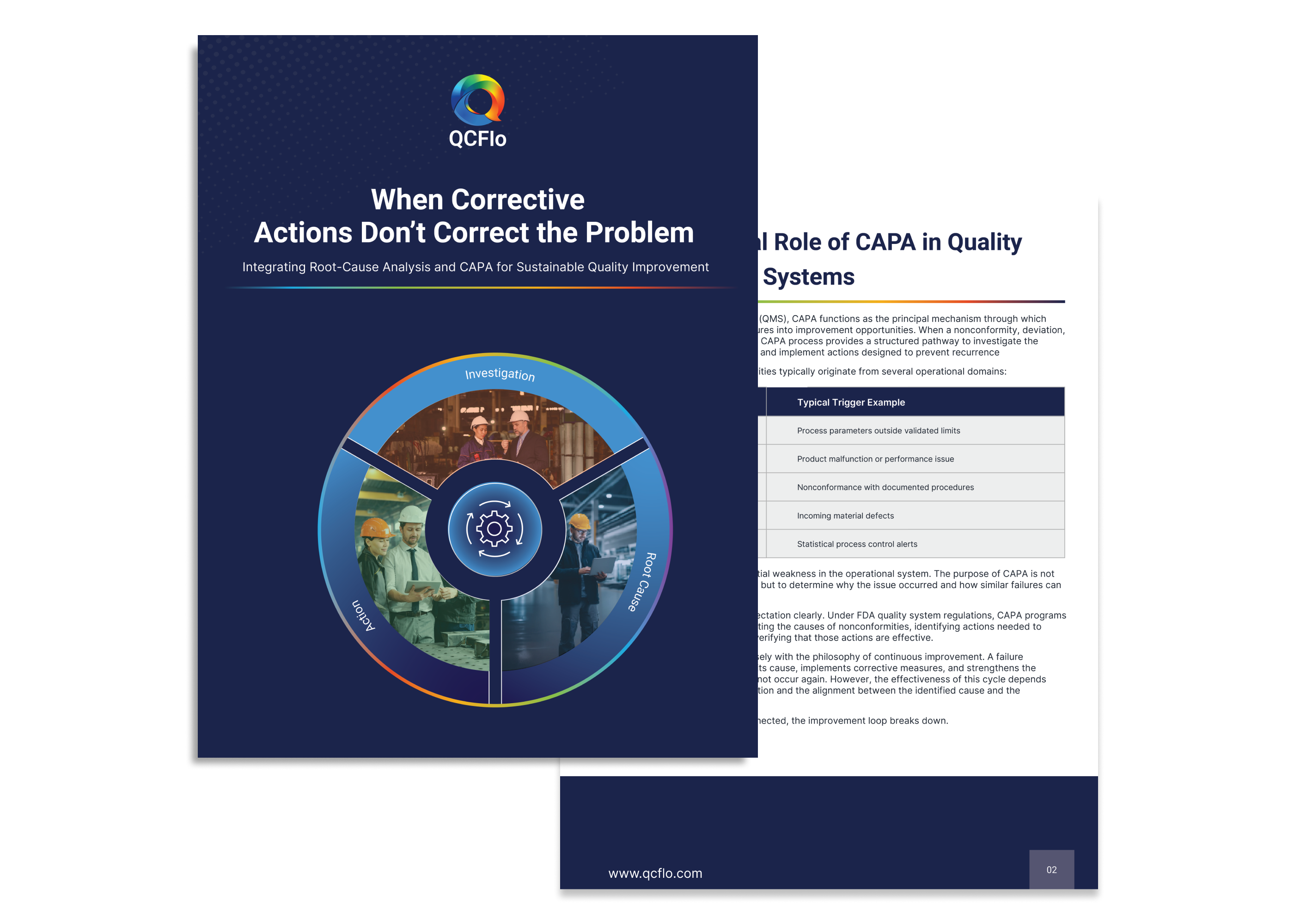
Learn why corrective actions often fail to prevent recurrence and how quality teams can improve effectiveness verification.
Download the White PaperWhy CAPA Action Plans Fail: Common Mistakes to Avoid
The most common CAPA action plan mistakes include treating the plan as a compliance exercise, jumping to solutions before identifying the root cause, defining actions that are too broad, assigning unclear ownership, and closing the CAPA before verifying effectiveness.
Treating the CAPA Action Plan as a Compliance Exercise
When the focus is only on satisfying audit or regulatory requirements, CAPA actions often become a paperwork exercise rather than a meaningful improvement initiative.
Jumping to Solutions Too Quickly
Implementing corrective actions before fully understanding the root cause can lead to temporary fixes that fail to address the underlying issue.
Defining Actions That Are Too Broad
Actions such as “improve training” or “strengthen processes” may sound effective but often lack the clarity needed for successful implementation and measurement.
Assigning Unclear Ownership
Without clearly defined responsibilities, actions can be delayed, overlooked, or completed inconsistently, reducing the effectiveness of the CAPA plan.
Closing the CAPA Before Verifying Effectiveness
Completing actions does not automatically mean the issue has been resolved. Organizations should verify that corrective and preventive actions have achieved the intended results and prevented recurrence.
Successful CAPA action plans focus on solving the right problem, implementing clearly defined actions, assigning accountability, and verifying long-term effectiveness. Avoiding these common mistakes can significantly improve CAPA outcomes and reduce the risk of recurring quality issues.
Building A More Effective CAPA Process
A CAPA action plan is only as effective as its execution. Organizations may identify the right root cause, define appropriate corrective and preventive actions, and establish clear timelines, but the desired outcomes are difficult to achieve when responsibilities, records, and follow-ups become fragmented across teams and systems.
This is why many organizations move beyond manual CAPA management and adopt a digital CAPA management software. By bringing CAPA activities, documentation, approvals, and effectiveness checks into a single environment, teams can maintain better visibility, accountability, and traceability throughout the process.
If you’d like to explore how a digital QMS can support your CAPA program, schedule a personalized demo with our team.
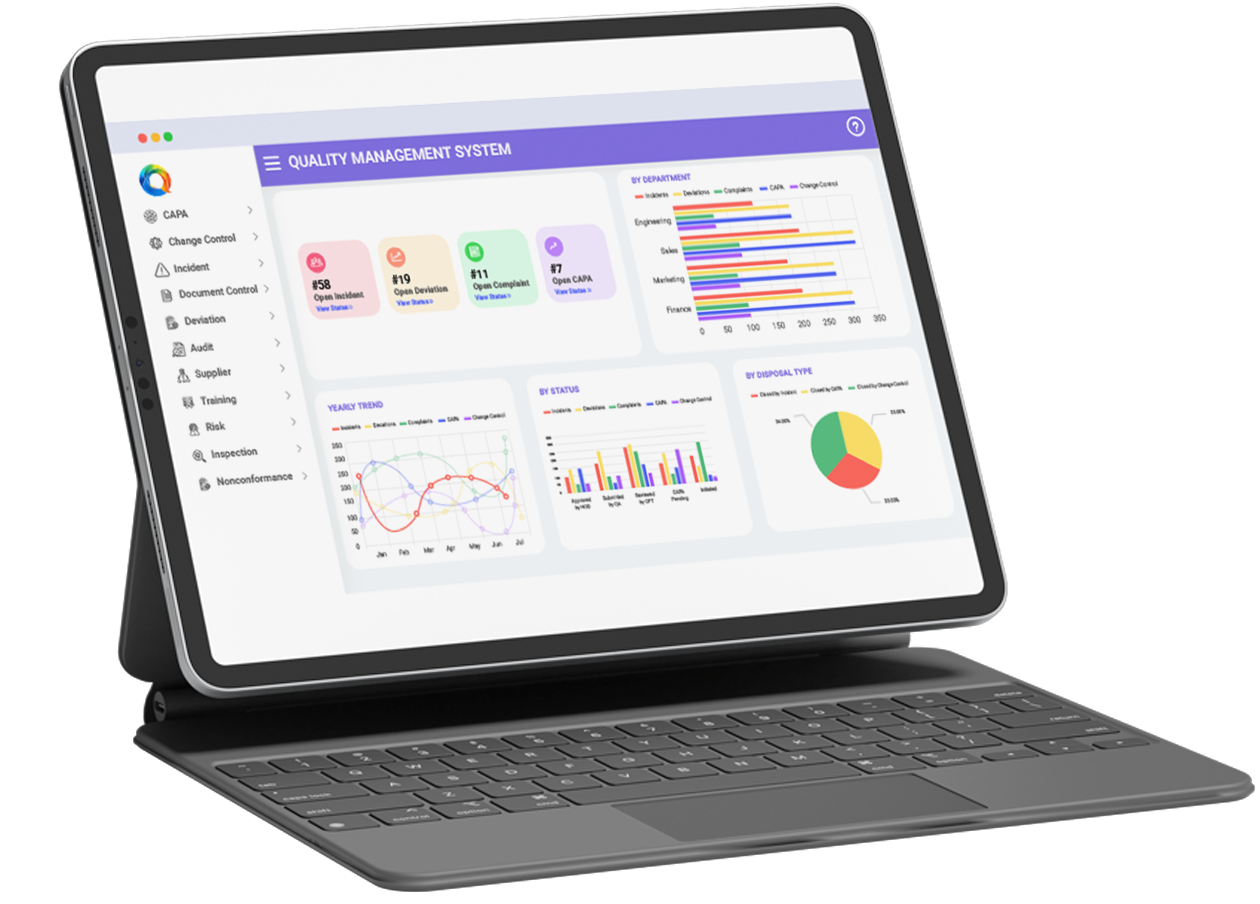
Centralize CAPA workflows, accountability, and effectiveness tracking.
See QCFlo in Action-
What is the difference between a CAPA and a CAPA action plan?
A CAPA is the overall process used to investigate and resolve quality issues. A CAPA action plan is the documented roadmap that defines how corrective and preventive actions will be implemented.
-
Who is responsible for creating a CAPA action plan?
A CAPA action plan is typically developed by the team investigating the issue, with input from relevant stakeholders and approval from quality management personnel.
-
When should a CAPA action plan be created?
A CAPA action plan should be created after the root cause has been identified and before corrective and preventive actions are implemented.
-
How do you measure the effectiveness of a CAPA action plan?
Effectiveness is measured by verifying that the issue has been resolved, corrective actions have been implemented, and similar problems do not recur over time.
-
When can a CAPA action plan be closed?
A CAPA action plan can be closed once all actions have been completed and their effectiveness has been verified through objective evidence.
-
What should organizations do if a CAPA action plan is ineffective?
Organizations should reassess the root cause, review implemented actions, identify gaps, and develop additional measures to prevent the issue from recurring.
-
Can CAPA action plans be managed without a QMS?
Yes, CAPA action plans can be managed manually. However, maintaining documentation, accountability, and traceability becomes more difficult as processes grow in complexity.
-
How do you write a CAPA action plan?
To write a CAPA action plan, define the problem, identify the root cause, outline corrective and preventive actions, assign ownership, establish timelines, and define effectiveness checks.
-
What is a CAPA action plan template?
A CAPA action plan template is a standardized document used to capture key information such as the issue, root cause, actions, responsibilities, timelines, and effectiveness criteria.